

Advancing maternal age may increase some pregnancy risks; however, with proper planning and regular follow-up, a healthy pregnancy is possible.
Today, because of education, career and social life, the age of becoming a mother keeps moving later. That is why one of the questions I hear most often in my outpatient clinic is: “Doctor, is it dangerous to get pregnant after 35?”
The short answer: pregnancy after 35 can usually be carried on safely. What matters is not to see age alone as a “risk label,” but to plan the pregnancy consciously and follow it up regularly.
Why Is 35 Seen as a “Threshold”?
First of all, it is important to know that 35 is not a sharp line at which everything suddenly changes. Some pregnancy-related risks increase gradually with age and become more pronounced especially at 40 and beyond.
Therefore, when it comes to pregnancy after 35, rather than getting stuck on a single number, one needs to look at the expectant mother’s overall health picture. An expectant mother who exercises regularly, has no chronic illness and has prepared well for pregnancy may, in some cases, be in a more favorable position than a younger but unprepared pregnancy.
The current approach of ACOG (American College of Obstetricians and Gynecologists) also recommends making the assessment not only with the “over 35” label, but together with the person’s existing illnesses and individual risks in addition to age.
Which Risks May Increase at Advanced Maternal Age?
As maternal age advances, the likelihood of the following conditions may increase:
- Chromosomal differences
- Pregnancy diabetes (gestational diabetes)
- Gestational hypertension
- Preeclampsia
However, the critical point here is this: an increase in risk does not mean these problems will definitely occur. We are talking about an increase in statistical probability; the individual outcome varies depending on the expectant mother’s general health and follow-up.
The overall course of pregnancy at an advanced age should also be considered. The likelihood of conditions such as preterm birth, low birth weight or the need for a cesarean section may increase somewhat. However, none of these is inevitable; with regular follow-up and preparation before pregnancy, most of these risks become manageable.
Why Is Pre-Pregnancy Assessment Important?
In pregnancy at an advanced age, one of the most valuable steps is the assessment carried out before the pregnancy begins. At this stage, the following are reviewed:
- Blood pressure and weight
- Medications in use
- Chronic illnesses
- Necessary vitamin and folic acid supplementation
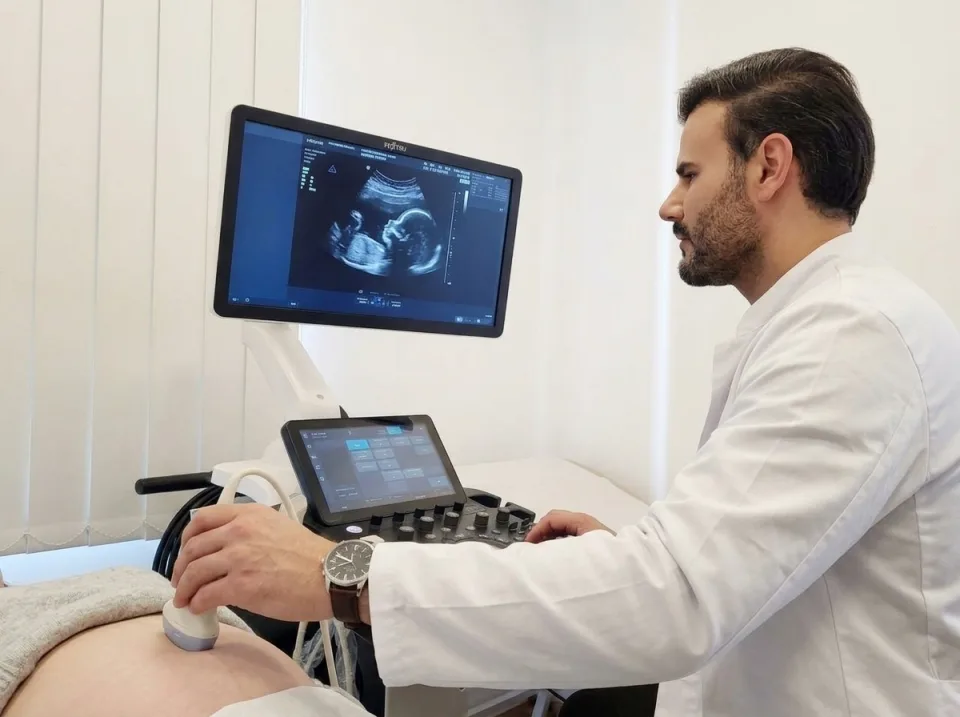
Once the pregnancy has begun, appropriate ultrasound follow-ups and prenatal screening options are planned together with the family.
During this assessment, the expectant mother’s lifestyle is also discussed. A balanced diet, appropriate weight management, avoiding smoking and alcohol, and regular physical activity contribute to a healthier course in pregnancy at an advanced age, just as at any age. Bringing conditions such as thyroid problems, high blood pressure or diabetes, if present, under control before pregnancy markedly reduces the likelihood of possible complications.
Screening or Diagnosis? NIPT, CVS and Amniocentesis
Today, with methods such as the cell-free DNA test (NIPT / cfDNA), early screening for certain chromosomal abnormalities can be performed.
The important point here is to know that these tests are not “diagnostic tests” but “screening tests.” In cases where a definitive diagnosis is needed, methods such as CVS (chorionic villus sampling) or amniocentesis may come into consideration.
According to current recommendations, prenatal genetic screening and diagnostic options should be offered to all pregnant women, not only to women over 35.
When deciding among these options, maternal age alone is not the determining factor. Screening results, family history and the expectant mother’s preferences are evaluated together. Our aim is not to worry the family, but to help them make an informed choice with accurate information. For this reason, what each test means and how the results will be interpreted are discussed in detail during pregnancy follow-up.
Conclusion: Plan Consciously Instead of Fearing Age
Instead of fearing pregnancy after 35, the pregnancy should be planned consciously.
Today there are many expectant mothers aged 35 and over who have a healthy pregnancy and give birth without problems. What matters is to start the pregnancy journey prepared, to attend regular check-ups and to communicate openly with your doctor whenever there is any symptom. It is a more accurate approach to think of age not as an obstacle, but as a reminder to plan more carefully.
Remember: the key to a healthy pregnancy is not just calendar age; it is the expectant mother’s general health, her preparation before pregnancy and regular follow-up.
Frequently Asked Questions
Is pregnancy after 35 definitely risky?
No. The likelihood of some risks increases gradually with age, but this does not mean these risks will definitely occur. With regular follow-up, most pregnancies can be carried on healthily.
Which screening tests can be performed in pregnancy at an advanced age?
Appropriate ultrasound follow-ups and screening methods such as NIPT (cell-free DNA) can be used. When a definitive diagnosis is needed, CVS or amniocentesis is considered.
Does the NIPT test make a definitive diagnosis?
No. NIPT is a screening test, not a diagnostic test. The results are used to assess risk; further tests may be needed for a definitive diagnosis.
Is prenatal genetic screening done only for women over 35?
According to current recommendations, prenatal genetic screening and diagnostic options should be offered to all pregnant women; they are not limited to those over 35.
Op. Dr. Hakan Sağer
Obstetrician & Gynecologist

Op. Dr. Hakan Sağer is an Obstetrician & Gynecologist. He completed his specialty training at the University of Health Sciences (SBÜ) Bursa Yüksek İhtisas Training and Research Hospital; since 2024 he has been seeing patients for pregnancy follow-up, gynecological conditions and aesthetic gynecology at his private practice in Nilüfer, Bursa. The articles on this website are for informational purposes.
Legal notice. This website is for information only and is not advertising. Its content does not replace an examination by a physician. Please have an examination for your symptoms; this article does not provide a diagnosis.